How we got here
Seven years of trying, two donors lost, one change of direction — and then everything at once.
Four names
Donor Nexus sends profiles. We study them closely — faces, childhood photos, ancestry, family history.
-
The first name we were given. Nineteen, from Idaho, Irish and German ancestry — and on paper the strongest face-shape match of anyone we would see.
But her timeline didn't work. She was leaving to study abroad on September 1, and a fresh cycle couldn't be finished before then.
-
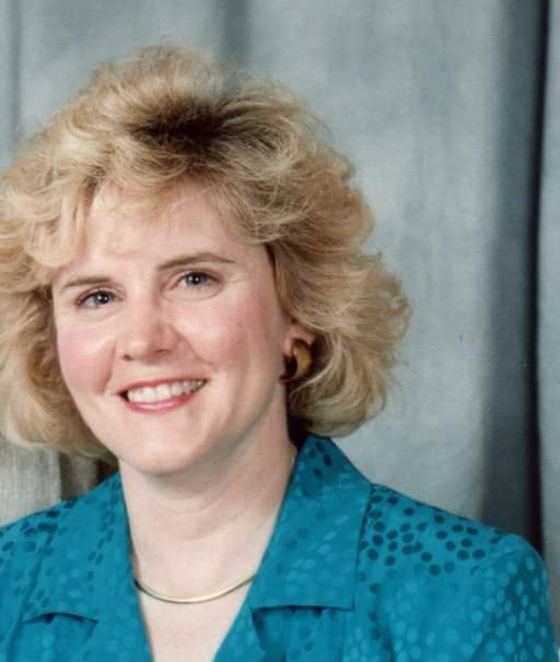
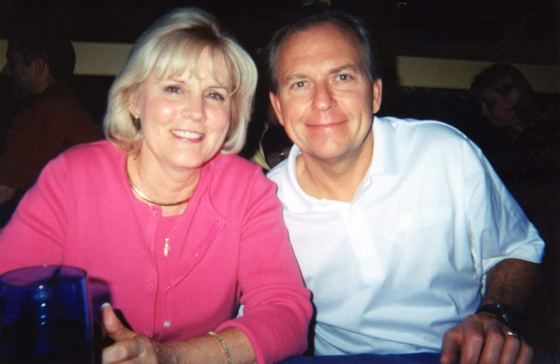
Donors 4705, 4750, 4722 and 4737 — ranked by resemblance to Michelle across facial structure, natural coloring, childhood photographs, build, ancestry and athletic history.
Two were nearly tied: 4705 matched Michelle's Polish paternal line, 4750 her English maternal line. Of the four, only 4750 had proven fertility — three prior cycles, one of which produced seven normal embryos.
Let the science inform you, and let God's peace confirm it. When your mind and your spirit rest on the same name — that is your answer.From the original comparison
The match
A proven donor, available and excited to cycle in Miami. We ask the careful questions first, then commit.
-
She's available and excited to cycle for you in Miami.Haley, Donor Nexus · July 29
Agency fees for her came to $35,100.
-
Robert is a known carrier of SLC45A2 (OCA4). Any donor would need to be screened for that specific gene. We said so in writing, in advance.
We also asked, in writing, whether the deposit could come back.
The deposit is not non-refundable… you can move your deposit to a new donor or receive a full refund of your deposit minus any fees paid out on the donor.Haley, Donor Nexus · August 3
That answer is the reason the next six weeks ended the way they did.
-
For five days, this was it. We had a proven donor, a clinic, and a plan.
Losing her, twice
One month. Two matched donors. Neither ever reached a completed screening.
-
Dr. Alford confirmed the omission. The agency said they were working on it.
Eight days later, on August 18, the only update was that they were "currently speaking with the donor about the additional compensation and timeline."
-
The day before, Robert had written asking for a straight status update — and volunteered an additional $1,000 to move things along.
On a call with Miranda we selected 4458, with 4441 as a second. On August 28 the agency confirmed the $12,500 would move to her with no additional deposit.
-
We had already agreed to wait until October for her. Then she was unavailable too.
In their place came four new profiles — all first-time donors, at $35,800 to $43,600. That was a step backwards from where we had started in July.
- Time spentOne month
- Donors matchedTwo
- Screenings completedNone
- Held by the agency$12,500
A different door
We stopped waiting on people who might change their minds, and chose eggs that already existed.
-
A fresh cycle asks a long chain of things to line up and stay lined up: a donor has to commit, accept the compensation, complete the right screening, clear psych and legal, travel for monitoring, travel again for retrieval — and stay willing through all of it.
Twice that chain broke for reasons that had nothing to do with medicine.
Frozen eggs already exist. The screening is already done. Nobody can change their mind.
-
The signed Match Paperwork was clear: if a donor withdraws for reasons unrelated to medical screening, the deposit is refundable, less actual costs. No hold fee had ever been paid — the agency had confirmed that in writing on August 3.
Both donors withdrew. We released no one.
-
Order R10287791 completed on September 17 — payment and documents received.
Her age matters more than any other single number in this process. Egg age, not sperm age, drives whether an embryo is chromosomally normal. At twenty-eight, roughly six in ten of her embryos would be expected to come back normal.
-
Annie at IVFMD explained it plainly: the guarantee is considered fulfilled once an embryo has been successfully created, so adding genetic testing ends it.
We would rather know which embryos are normal than hold a guarantee.
Everything at once
After two months of waiting on other people, eight days where it all finally moved.
-
Your donor eggs are shipping out this evening and are set for arrival tomorrow, Thursday, September 24th.Hailey Love, MyEggBank · September 23
Twelve eggs, in a nitrogen shipper, on a plane. After everything, they simply arrived.
-
Some of it was routine. Some of it was deciding, in writing, what happens to our embryos under circumstances nobody wants to think about.
- PhysicianDr. Enrique Soto
- Assisted hatchingYes
- Sex chromosomes on reportYes — we want to know
- If one of us diesTo the surviving partner
- If both of us dieDiscard
- Long-term storageHavenCryo
Annie reviewed them the next morning: "filled out perfectly."
-
Each egg was fertilized by ICSI — a single sperm placed directly into the egg, rather than left to find its own way. It is the standard approach with thawed donor eggs, and it makes the measurements from Robert's January analysis largely beside the point.
Then everyone goes home and waits one day.
Six
The final count from this cycle.
-
This is the day-one report — the count of eggs that fertilized normally. It is not yet a count of embryos we can use, and that number will come down between now and day five. That isn't a sign of anything wrong; it is simply how every cycle works.
What it does tell us is that the fertilization step went better than expected.
- Eggs thawed12
- Fertilized normally11
- Rate92%
- Typical rate70–80%
Next comes the blastocyst report on October 7: how many of the eleven keep dividing and reach the stage where they can be biopsied. Each one that does has a few cells taken and goes straight into the freezer, and the samples are sent away for testing.
Results are reviewed with Dr. Alford on October 28 at the Naples office, and the transfer is booked for Wednesday, November 18 with Dr. Soto.
One honest note: the biopsy itself carries a small risk to an embryo. It very rarely causes harm, but it is not nothing, and it is the trade we accepted when we chose to test.
-
This is the number that matters. Eleven fertilized eggs became six embryos strong enough to biopsy and freeze; five stopped developing along the way and were not usable.
- Eggs thawed12
- Inseminated12
- Fertilized normally11
- Not usable5
- Biopsied & frozen6
Losing five between day one and day seven is normal — roughly half of fertilized eggs stop on their own, and that winnowing is the point of growing them this far. Six frozen from twelve thawed eggs is a solid result.
Nothing remains in culture. The cells taken from the six went out to the genetics lab this week. The lab has sent its last update — the results come to us at the consultation.
The six stay at IVFMD for three months, then move to long-term storage at HavenCryo unless a transfer happens first.
-
Within a day of the lab closing the cycle, the rest of it was set.
- PGT resultsOct 28, 11:15 am
- WithDr. Alford, Naples
- TransferNov 18, 11:00 am
- WithDr. Soto
Dr. Soto transfers Monday through Thursday every week — Friday is his surgery day — and November 18 was his next open date. We said yes to it and asked to be put on the cancellation list as well: any day, early or late, anything that gets us in sooner.
The consult date was set from the lab’s average turnaround rather than a known result date, so if the results land early the appointment moves up with them. There is no way to watch the testing in progress — the clinic sees only “in progress” or “ready”.
Annie is ordering the medications now, so the prep does not have to wait on the October 28 consult.
-
Michelle started her medications the same morning. The appointment went ahead even though the PGT results had not come back, and it turned out to be worth going: nobody had told us the grades until now.
- Day 5 — ABThe strongest one
- Day 6 — BB55–60%
- Day 6 — BB55–60%
- Day 6 — BCAbout 50/50
- Day 7Below average
- Day 7Below average
Those percentages are the chance of a live birth if the embryo comes back genetically normal. Dr. Alford's expectation: one, maybe two of the six will not be normal, and she expects the rest to be.
On the two day 7s — normally she would be more concerned, but these came from frozen donor eggs from a 28-year-old. Vitrified eggs often need the extra day simply to recover from the thaw, so reaching blastocyst late matters less here than it usually would.
She was also honest that grading is subjective. There is no checklist; an embryologist looks and assigns a letter. A “C” can mean too few cells, which implants less often — or cells that are merely disorganised, which implants fine but may not continue. Most embryos anywhere are day 5 or day 6 BC, so BC is not a bad grade.
The results themselves are still at the lab. There is no tracking and no notification — she will call. Michelle also cannot log into the patient portal any more; it tells her to contact the clinic, and nobody has been able to fix it yet.
-
Dr. Alford called on the afternoon of October 29.
- MD3 · day 6Euploid — a boy · 3BC
- MD1 · day 5Triploid · 3AB
- MD6 · day 65q loss, 28 Mb · 6BB
- MD8 · day 6Monosomy 7, 22, X · 3BB
- MD9 · day 77p loss, 20 Mb · 3BC
- MD11 · day 7Trisomy 14 and 18 · 6BC
The written report came two days later and was blunter than the phone call. One embryo — MD3 — is euploid. The other five are not usable, and none of them was classified as mosaic.
The hardest line in it concerns MD1: the day 5, grade 3AB, the one Dr. Alford had called “a really, really good one.” It is triploid — three complete sets of chromosomes instead of two. The best-looking embryo of the six was the most abnormal of them. There is no clearer demonstration of why the grades told us nothing.
We had been told to expect four normal. Getting one is roughly a two per cent outcome — the far tail of a real distribution, not a sign that anything went wrong.
And the laboratory did its job well. Twelve eggs thawed, eleven fertilized, six reached blastocyst. Both of those rates are at or above what a good lab is expected to produce. The losses happened inside the egg, during its own chromosome division, before fertilization ever occurred. Those errors are random, they cannot be predicted from a donor’s age, and they are completely invisible under a microscope — which is the whole reason this testing exists.
Two things were working against us from the start, and both were fixed before the cycle began: the eggs were frozen rather than fresh, and two of the six only reached blastocyst on day 7.
On the grade — the one normal embryo is a BC, and that sounds worse than it is. Grading is subjective, and once an embryo is confirmed normal, that status is what drives the outcome. A normal BC blastocyst from donor eggs runs roughly 45–55% live birth per transfer. Close to a coin flip in our favour.
On the two girls — on the phone, Dr. Alford said they could still be normal. The written report does not say that. MD6 is missing a 28 Mb piece of the long arm of chromosome 5; MD9 is missing a 20 Mb piece of the short arm of chromosome 7. The lab has a mosaic category, with its own thresholds, and placed neither of them in it. Both were classified aneuploid.
There is one honest thread left, and it is thin: the report itself notes that segmental losses like these may arise after fertilization, in which case they can sometimes be confined to the outer cells that were sampled rather than the part that becomes the baby. That is a question for the genetic counselor. It is not a plan.
So MD3 is not the first of three. He is the one.
-
Michelle decided overnight. She texted it from a coffee shop the next morning:
Just saw the sweetest little boy and his little sister at Starbucks. God’s got this, I’ve got to release my own plans and follow his.
We had wanted a girl first. We had talked about it with Dr. Alford two days earlier, and she had agreed to honour it. Then the results came back and the only normal embryo was a boy — so that decided itself, the way a lot of this has.
We will still sit down with a genetic counselor. That was meant to be a conversation about the two girls behind him; after reading the report it is a conversation about the report itself, and about what a cohort like this one means for whatever comes after. It is not going to hold up the transfer.
November 18 stands.